
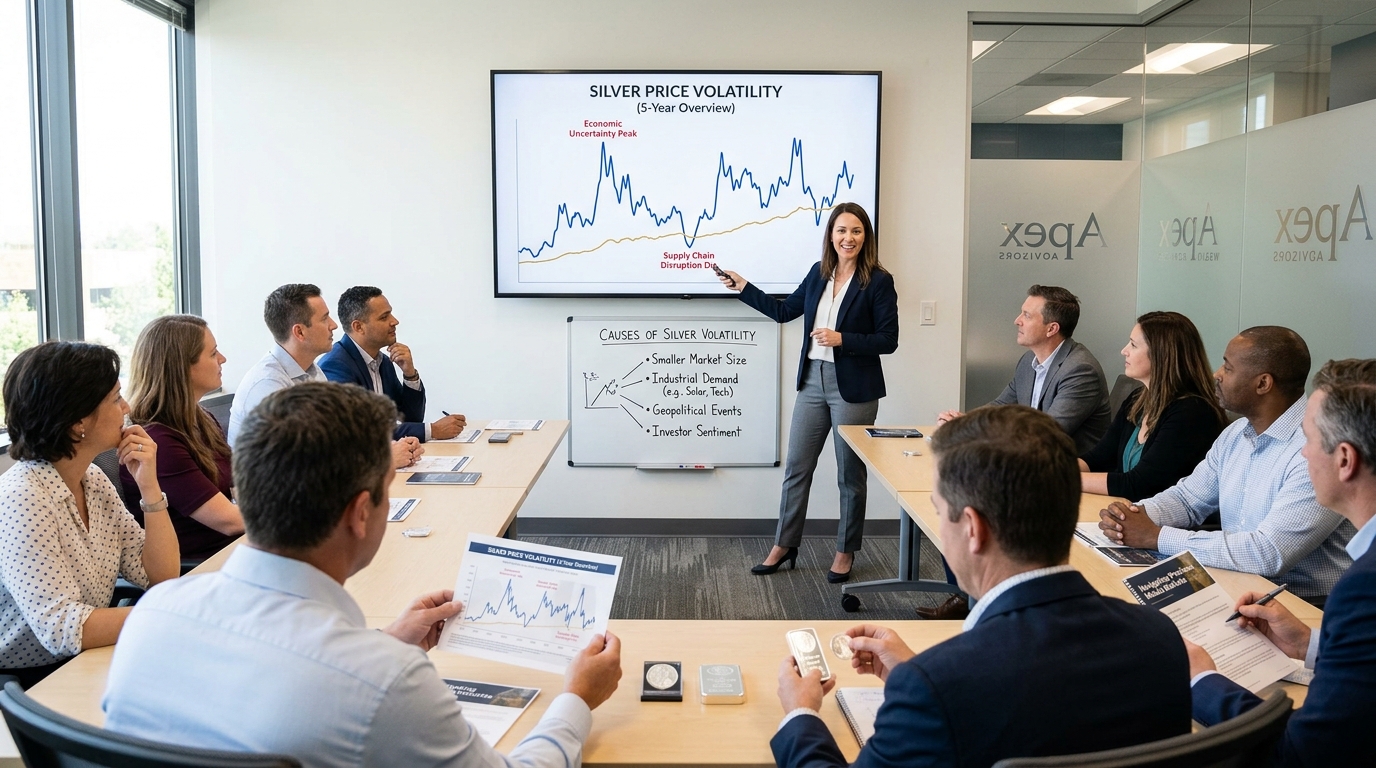
Understanding silver price volatility explained in simple terms can feel overwhelming at first, especially if you are new to metals investing or trading. However, once you break it down, the patterns and drivers behind price swings start to make sense. Silver is not just a precious metal; it is also an industrial commodity, and that dual role creates frequent price movements that catch many investors off guard.
When you look closely, silver behaves differently from gold. While gold often acts as a stable store of value, silver tends to move faster and more sharply. As a result, traders and long-term investors alike must pay attention to what causes these shifts. In this guide, we will walk through silver price volatility explained clearly, so you can better understand how it works and what it means for your strategy.
Why Silver Prices Move So Often
To fully grasp silver price volatility explained, you need to start with the basic idea of supply and demand. Like any market, silver prices rise when demand increases and fall when supply outweighs demand. However, silver has a unique position because it serves both investment and industrial purposes.
For instance, industries use silver in electronics, solar panels, and medical equipment. Therefore, when global manufacturing rises, demand for silver increases. On the other hand, when economic activity slows, industrial demand drops, often pulling prices down. At the same time, investors buy silver as a hedge against inflation or currency weakness, which adds another layer of complexity.
Because of this dual demand, silver reacts to both economic growth and financial uncertainty. That combination is a key reason why silver price volatility explained often involves sharper and more frequent price swings than other assets.
The Role Of Economic Cycles
Another important factor in silver price volatility explained is the global economic cycle. When economies expand, industrial demand rises, pushing silver prices higher. However, during recessions, demand can fall quickly, leading to sudden price drops.
Interestingly, silver does not always move in one direction during economic downturns. In some cases, investors rush into silver as a safe haven, which can push prices up even when industrial demand is weak. This mixed behavior makes silver more unpredictable compared to other metals.
Moreover, central bank policies also influence these cycles. When interest rates are low, investors often move into commodities like silver. Conversely, higher interest rates can reduce demand, since holding non-yielding assets becomes less attractive. These shifts play a major role in silver price volatility explained across different market conditions.
Impact Of Inflation And Currency Movements
Inflation is another key driver behind silver price volatility explained. When inflation rises, investors typically seek assets that preserve value, and silver becomes more attractive. As a result, demand increases, pushing prices higher.
At the same time, currency movements—especially the strength of the US dollar—have a direct effect on silver prices. Since silver is priced in dollars globally, a stronger dollar makes silver more expensive for international buyers. This often leads to reduced demand and lower prices.
On the other hand, when the dollar weakens, silver becomes more affordable worldwide, which can increase demand and lift prices. Therefore, understanding currency trends is essential when looking at silver price volatility explained in a broader context.
Market Speculation And Investor Behavior
Human behavior plays a surprisingly large role in silver price volatility explained. Markets are not driven purely by data; they are also influenced by emotions such as fear and greed. When investors expect prices to rise, they buy aggressively, which can push prices even higher in a short period.
Similarly, when negative sentiment spreads, investors may sell quickly, causing sharp declines. This is especially true in silver markets because they are smaller and more sensitive than gold markets. As a result, even moderate buying or selling pressure can create noticeable price swings.
Additionally, speculative trading through futures contracts and exchange-traded funds adds another layer of volatility. These instruments allow traders to take positions without owning physical silver, which can amplify price movements. Therefore, silver price volatility explained often includes the impact of short-term trading activity.
Supply Constraints And Mining Factors
Supply also plays a crucial role in silver price volatility explained. Unlike some commodities, silver production cannot increase quickly in response to higher prices. Mining operations take time to expand, and many silver mines are actually byproducts of other metal mining, such as copper or lead.
Because of this, supply is relatively inelastic in the short term. If demand suddenly rises, prices can spike because supply cannot keep up. Conversely, if mining output increases or recycling activity rises, prices may decline.
Geopolitical issues can also disrupt supply. For example, labor strikes, environmental regulations, or political instability in mining regions can reduce production. These disruptions often lead to sudden price changes, adding to overall volatility.
Industrial Demand And Technological Trends
One of the most interesting aspects of silver price volatility explained is how technological trends influence demand. Silver is widely used in emerging technologies, especially in renewable energy and electronics. For instance, the growth of solar energy has significantly increased demand for silver in recent years.
As new technologies develop, demand can rise unexpectedly, pushing prices higher. However, if industries find alternatives or improve efficiency, demand may decrease. This constant evolution creates ongoing uncertainty in the market.
Furthermore, changes in manufacturing trends can have immediate effects. A slowdown in electronics production, for example, can quickly reduce demand. Therefore, keeping an eye on technological developments is essential when understanding silver price volatility explained.
How Silver Compares To Gold Volatility
When discussing silver price volatility explained, it is helpful to compare silver with gold. While both are precious metals, silver is generally more volatile. This is mainly because its market is smaller and more influenced by industrial demand.
Gold tends to move steadily, especially during economic uncertainty. In contrast, silver often experiences sharper price swings in both directions. This makes silver attractive for traders looking for opportunities, but it also increases risk.
Additionally, silver often amplifies gold’s movements. When gold prices rise, silver may rise even more. However, when gold falls, silver can drop more sharply. This relationship is another key aspect of silver price volatility explained that investors should understand.
Strategies To Manage Silver Price Swings
Once you understand silver price volatility explained, the next step is learning how to manage it. Volatility is not necessarily a bad thing; it can create opportunities if approached correctly.
First, diversification is essential. Instead of putting all your funds into silver, consider balancing your portfolio with other assets. This helps reduce overall risk and smooth out returns.
Second, having a clear strategy is crucial. Whether you are investing for the long term or trading short-term movements, you need to define your goals. This prevents emotional decision-making during sudden price swings.
Third, staying informed is key. Since silver reacts to multiple factors, keeping up with economic news, interest rates, and industrial trends can give you an advantage. By understanding the bigger picture, you can better navigate silver price volatility explained in real time.
Long-Term Perspective Vs Short-Term Trading
Another important consideration in silver price volatility explained is the difference between long-term investing and short-term trading. Long-term investors often focus on silver’s role as a store of value and a hedge against inflation.
They are less concerned with daily price fluctuations and more focused on overall trends. In contrast, traders aim to profit from short-term movements, which requires a deeper understanding of market timing and technical analysis.
Both approaches can work, but they require different mindsets. Long-term investors benefit from patience and consistency, while traders need discipline and quick decision-making. Understanding where you fit helps you respond more effectively to silver price volatility explained.
Common Misconceptions About Silver Volatility
There are several misconceptions that often confuse people when learning about silver price volatility explained. One common myth is that silver is always a safe haven like gold. While it can act as a hedge, its industrial demand makes it more unpredictable.
Another misconception is that volatility means instability. In reality, volatility simply reflects price movement, not necessarily long-term value. In fact, many investors see volatility as an opportunity rather than a risk.
Finally, some people believe they can predict silver prices easily. However, because so many factors influence the market, predicting short-term movements is extremely difficult. Instead, focusing on understanding trends is a more reliable approach when dealing with silver price volatility explained.
Conclusion: Turning Volatility Into Opportunity
By now, silver price volatility explained should feel much clearer and more manageable. While the market may seem unpredictable at first, understanding the key drivers—such as economic cycles, inflation, industrial demand, and investor behavior—can give you a strong foundation.
Rather than fearing volatility, you can learn to use it to your advantage. With the right strategy, patience, and knowledge, silver can become a valuable part of your financial plan. Whether you are investing for the long term or exploring short-term opportunities, the key is to stay informed and disciplined.
Ultimately, silver price volatility explained is not just about understanding price swings; it is about recognizing how those movements fit into the bigger financial picture. Once you see that, you can approach the market with greater confidence and clarity.
FAQ
1. Why does silver fluctuate more than other metals?
Silver has both industrial and investment demand, which creates more frequent price changes compared to metals like gold.
2. Is silver a good hedge against inflation?
Yes, it can help protect value during inflation, although it may be more volatile than other safe-haven assets.
3. What factors influence silver prices the most?
Economic growth, industrial demand, interest rates, and currency strength all play major roles.
4. Should beginners invest in silver despite price swings?
Beginners can invest, but they should start with a clear plan and understand the risks involved.
5. How can investors reduce risks in the silver market?
Diversification, staying informed, and maintaining a long-term perspective can help manage risks effectively.