

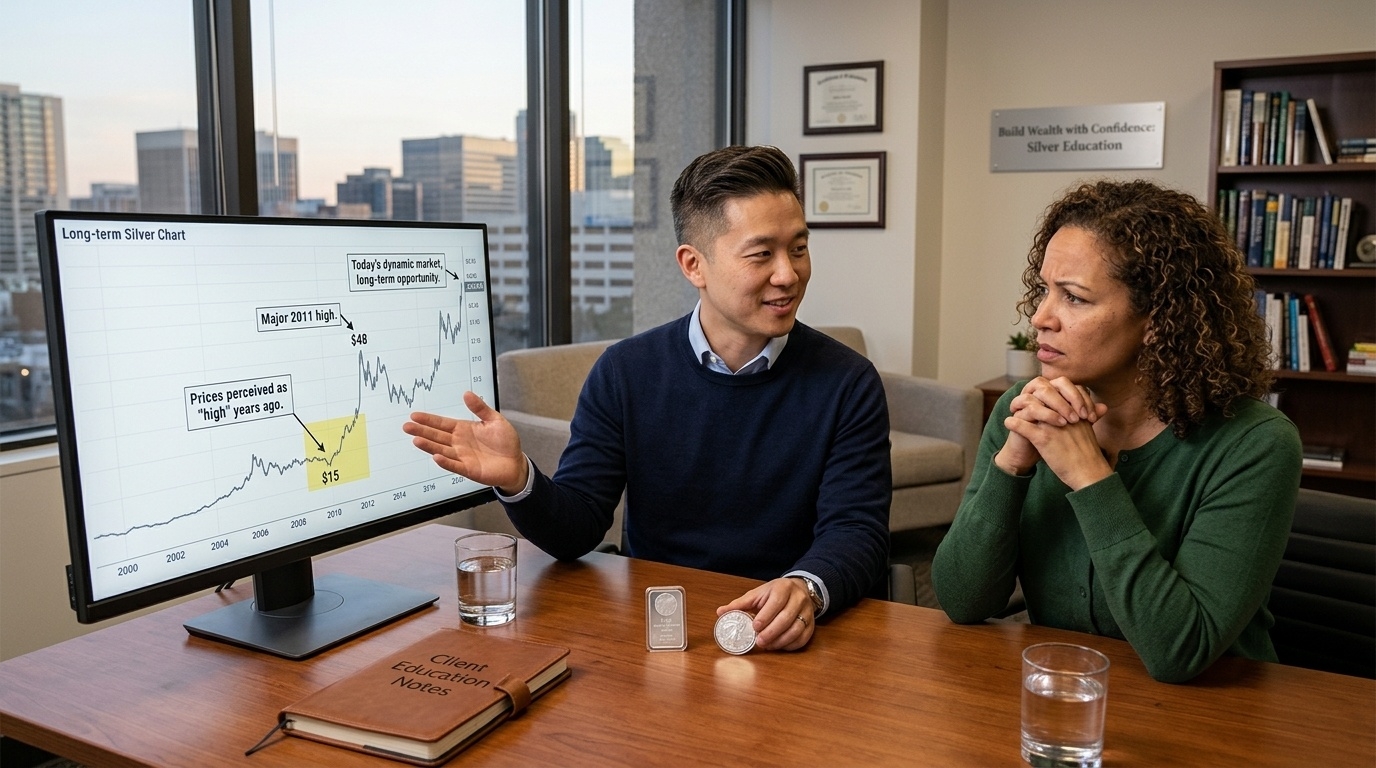
The fear of buying silver is something almost every investor experiences at some point. Even experienced traders feel hesitation before entering the market. However, this fear often becomes the biggest barrier to making progress. Instead of taking action, many people wait too long and miss opportunities.
At its core, the fear of buying silver comes from uncertainty. You worry that prices might drop right after you buy. While that concern is valid, it can also lead to inaction. As a result, you may stay on the sidelines while the market moves forward.
Learning how to manage the fear of buying silver is not about eliminating risk. Instead, it is about understanding the market and making decisions with greater confidence. Once you shift your mindset, investing becomes much more manageable.
Why this fear is so common among investors
The fear of buying silver often comes from past experiences or stories of losses. Many investors have either experienced or heard about buying at the wrong time. Because of this, hesitation becomes a natural response.
Additionally, silver is known for its volatility. Prices can move quickly, sometimes without clear warning. This unpredictability increases anxiety, especially for beginners.
Another factor is the desire for perfect timing. Many investors believe they must buy at the lowest possible price. However, this expectation is unrealistic. As a result, they delay decisions and miss good opportunities.
Social influence also plays a role. Seeing others succeed or fail can affect your confidence. However, relying too much on external opinions can make your decisions less clear.
Understanding these causes helps you address the fear of buying silver more effectively.
Understanding why perfect timing is a myth
One of the main reasons the fear of buying silver persists is the belief in perfect timing. Many investors wait for the exact bottom. However, this rarely happens.
Markets move based on many factors, including economic data, sentiment, and global events. Because of this, predicting exact turning points is extremely difficult.
Instead of focusing on perfection, aim for good timing. Entering the market during reasonable conditions is often enough. Over time, consistency matters more than precision.
Additionally, waiting for perfect conditions can lead to missed opportunities. Prices may continue rising while you hesitate. As a result, your fear becomes self-fulfilling.
Accepting that timing will never be perfect reduces pressure. This shift helps you move forward with more confidence.
How market cycles can reduce uncertainty
Understanding market cycles can help reduce the fear of buying silver. Silver tends to move in patterns that repeat over time. While each cycle is different, the general structure remains similar.
Markets often move through accumulation, growth, peak, and correction phases. Recognizing these stages gives you a clearer perspective.
During accumulation, prices are stable and often undervalued. This phase can present strong opportunities. However, it often feels uncertain, which increases fear.
During growth phases, prices rise and confidence increases. However, entering too late can increase risk. Therefore, understanding the cycle helps you position yourself better.
Corrections may seem negative, but they often create new entry points. By viewing them as opportunities, you shift your mindset.
When you understand cycles, the fear of buying silver becomes easier to manage.
Practical strategies to overcome hesitation
Overcoming the fear of buying silver requires practical strategies. While knowledge helps, action builds confidence. Simple approaches can make a big difference.
Start with smaller investments. By reducing the size of your initial position, you lower risk. This makes it easier to take the first step.
Another effective method is gradual buying. Instead of investing all at once, spread your purchases over time. This reduces the pressure of timing.
Setting clear rules can also help. Decide in advance when you will buy and under what conditions. This removes emotional decision-making.
Additionally, focus on long-term goals. Short-term fluctuations become less important when you think about the bigger picture.
By applying these strategies, you begin to replace fear with confidence.
Managing emotions during price movements
Emotions play a major role in the fear of buying silver. When prices move quickly, reactions can become intense. Therefore, learning to manage emotions is essential.
During price increases, excitement can lead to rushed decisions. However, buying based on hype often results in regret. Staying patient helps you avoid this trap.
During price drops, fear may cause hesitation. Yet, these moments often offer value. Changing your perspective helps you see opportunities instead of risks.
Creating a structured plan reduces emotional influence. When you follow a clear strategy, you rely less on feelings. This leads to more consistent decisions.
Limiting exposure to constant market updates can also help. Too much information can increase anxiety. Focusing on key trends keeps your mindset balanced.
Over time, managing emotions becomes easier with experience.
Building confidence through experience
Experience is one of the most effective ways to overcome the fear of buying silver. The more you engage with the market, the more familiar it becomes.
Tracking your decisions can provide valuable insights. By reviewing your actions, you learn what works and what does not. This helps improve your strategy.
Learning from mistakes is also important. Every investor makes errors. However, each mistake offers a chance to grow.
As you gain experience, patterns become clearer. You begin to recognize opportunities with greater ease. This understanding builds confidence.
Small successes also matter. Each positive decision reinforces your belief in your strategy. Over time, this creates a strong foundation.
Confidence grows gradually, but it becomes one of your greatest strengths.
Shifting your mindset from fear to strategy
A mindset shift is essential for overcoming the fear of buying silver. Instead of focusing on potential losses, focus on preparation and strategy.
Accept that risk is part of investing. While you cannot eliminate risk, you can manage it. This perspective reduces anxiety.
Focus on probability rather than certainty. No decision is guaranteed, but informed choices improve your chances.
Avoid comparing your journey to others. Each investor has a different path. Staying focused on your own strategy helps maintain clarity.
Celebrate progress instead of perfection. Every step forward builds confidence. Over time, this mindset creates lasting improvement.
By shifting your perspective, fear becomes manageable rather than overwhelming.
Conclusion
The fear of buying silver is a natural part of investing, but it does not have to control your decisions. By understanding market behavior, accepting imperfect timing, and using simple strategies, you can move forward with confidence.
While uncertainty will always exist, preparation reduces its impact. Over time, experience strengthens your ability to navigate the market. As a result, your decisions become more consistent and less emotional.
By focusing on long-term goals and maintaining discipline, you can overcome hesitation and take advantage of opportunities. Confidence is not built overnight, but with patience and practice, it becomes one of your strongest assets.
FAQ
- Why do investors fear buying at the wrong time?
Investors worry about price drops after buying, which creates hesitation and delays decision-making. - Can I avoid buying silver at the peak?
While you cannot avoid peaks completely, using gradual investing and timing strategies can reduce risk. - Is it better to wait for prices to drop?
Waiting can help, but waiting too long may lead to missed opportunities. Balance is important. - What role does industrial demand play in silver prices?
Industrial demand affects silver prices because it is widely used in technology and manufacturing. Higher demand often pushes prices up. - How can beginners start investing in silver?
Beginners can start with physical silver, ETFs, or mining stocks. Starting small and learning the market helps reduce risk.