

Understanding economic data silver trends is essential if you want to make informed decisions in the silver market. While price charts and technical indicators provide valuable insights, economic data often drives the underlying movement. Therefore, learning how economic indicators influence silver allows you to anticipate changes instead of reacting to them.
At first, economic data silver trends may seem complicated because there are many variables involved. However, once you focus on key indicators such as inflation, interest rates, and economic growth, the picture becomes clearer. By connecting these factors to silver price behavior, you can build a stronger and more confident investment strategy.
Why Economic Data Drives Silver Prices
To fully understand economic data silver trends, you need to recognize why silver reacts to economic changes. Silver is both an industrial metal and a store of value. Because of this dual role, it responds to different types of economic conditions.
For example, during periods of strong economic growth, industrial demand for silver increases. This can push prices higher. On the other hand, during economic uncertainty, investors often turn to silver as a safe-haven asset.
As a result, economic data silver trends reflect both growth expectations and investor sentiment. By understanding these dynamics, you gain a clearer view of how prices may move.
Inflation And Its Impact On Silver Trends
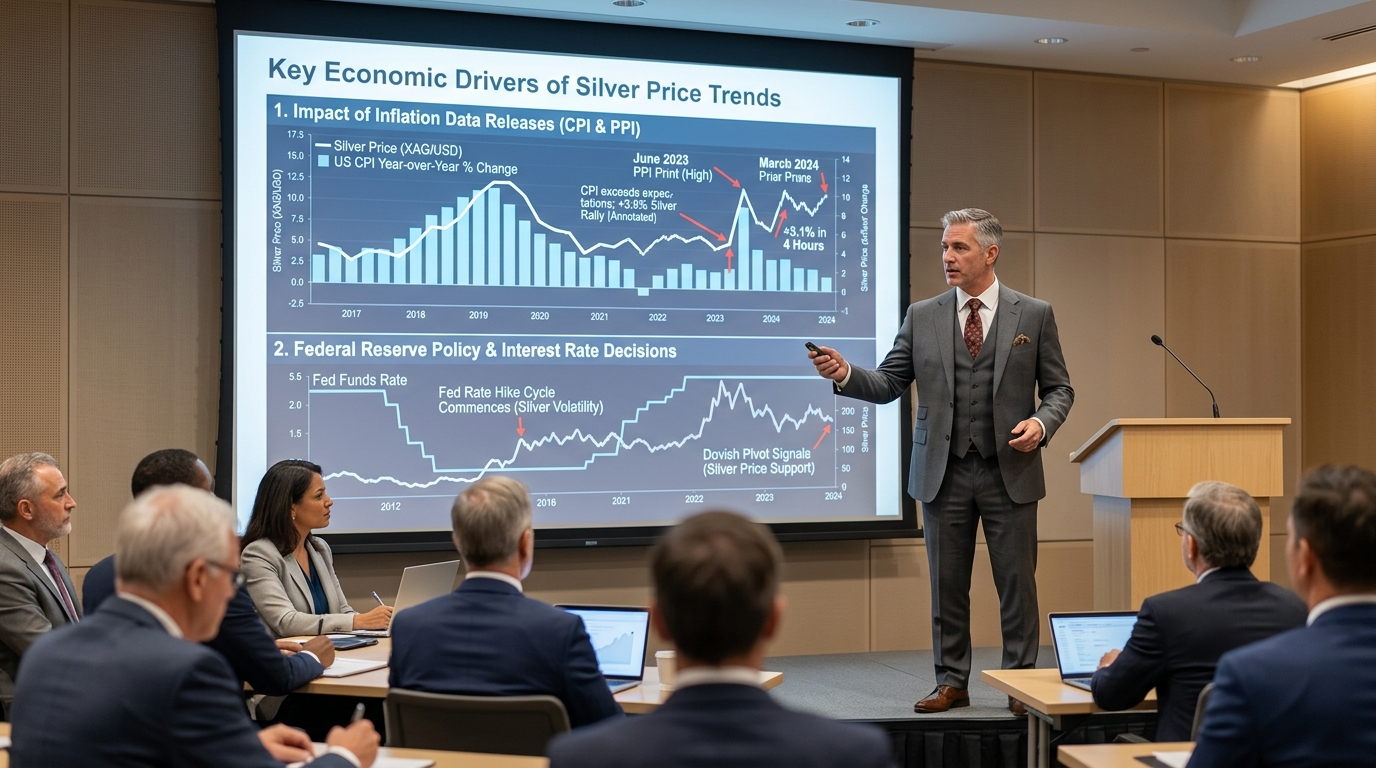
Inflation is one of the most important factors in economic data silver trends. When inflation rises, the purchasing power of currency declines. This often leads investors to seek assets that can preserve value.
Silver, like gold, is commonly used as a hedge against inflation. As inflation increases, demand for silver tends to rise, which can support higher prices. This relationship makes inflation data a key indicator to watch.
However, the reaction is not always immediate. Market expectations play a role. If inflation is already anticipated, the price impact may be smaller. Therefore, understanding expectations is essential when analyzing economic data silver trends.
Interest Rates And Market Behavior
Interest rates are another critical component of economic data silver trends. Central banks adjust interest rates to control inflation and manage economic growth. These changes have a direct impact on silver prices.
When interest rates rise, holding cash or bonds becomes more attractive. This can reduce demand for silver, leading to lower prices. Conversely, lower interest rates make non-yielding assets like silver more appealing.
Because of this relationship, central bank announcements are closely watched by investors. By monitoring interest rate decisions, you can better understand economic data silver trends and anticipate potential price movements.
Economic Growth And Industrial Demand
Economic growth plays a significant role in economic data silver trends due to silver’s industrial applications. Silver is used in electronics, solar panels, and various manufacturing processes.
When the economy expands, demand for these products increases. This leads to higher demand for silver, which can drive prices upward. Conversely, during economic slowdowns, industrial demand may decline.
By analyzing GDP growth and manufacturing data, you can gain insights into this aspect of economic data silver trends. This helps you understand how broader economic conditions influence the market.
Employment Data And Consumer Confidence
Employment data also affects economic data silver trends, although its impact may be indirect. Strong employment figures indicate a healthy economy, which can boost industrial demand for silver.
At the same time, employment levels influence consumer confidence. When people feel secure in their jobs, spending increases. This can support economic growth and, in turn, silver demand.
However, strong employment data may also lead to higher interest rates. This can offset positive effects on silver prices. Therefore, it is important to consider how different factors interact within economic data silver trends.
Currency Strength And Global Influence
Currency movements, particularly the strength of the US dollar, are closely tied to economic data silver trends. Since silver is priced in dollars, changes in currency value can affect its price.
A stronger dollar makes silver more expensive for international buyers, which can reduce demand. Conversely, a weaker dollar makes silver more affordable, increasing demand.
Economic data influences currency strength. For example, strong economic performance often supports a stronger currency. By understanding this relationship, you can better interpret economic data silver trends.
Geopolitical Events And Market Reactions
While not always classified as economic data, geopolitical events often interact with economic indicators. These events can significantly influence economic data silver trends.
For instance, political instability or global conflicts can increase uncertainty. This often leads investors to seek safe-haven assets like silver, driving prices higher.
At the same time, these events can disrupt economic activity, affecting industrial demand. By considering both factors, you gain a more complete understanding of economic data silver trends.
Combining Economic Data With Technical Analysis
While economic data provides context, combining it with technical analysis improves your overall strategy. Economic data silver trends become more actionable when supported by price patterns and indicators.
For example, if inflation data suggests rising silver demand and charts show an uptrend, this creates a stronger signal. Similarly, conflicting signals may indicate caution.
By integrating both approaches, you move beyond simple observation. You begin to make decisions based on a combination of data and analysis.
Avoiding Common Misinterpretations
Even with access to data, mistakes can occur when analyzing economic data silver trends. One common error is focusing on a single indicator without considering the broader context.
Another mistake is reacting too quickly to news. Markets often adjust expectations before data is released. This means that price reactions may not always align with the data itself.
Additionally, ignoring market sentiment can lead to confusion. Understanding how investors interpret data is just as important as the data itself. By avoiding these mistakes, you improve your analysis of economic data silver trends.
Building A Consistent Analysis Routine
Consistency is key when working with economic data silver trends. Instead of reacting randomly, develop a routine for monitoring key indicators.
For example, track inflation reports, interest rate decisions, and economic growth data regularly. Focus on how these indicators affect silver prices over time.
Keeping notes on your observations can also help. This allows you to identify patterns and improve your understanding. Over time, this routine strengthens your ability to analyze economic data silver trends effectively.
Developing Confidence Through Knowledge
Confidence in investing comes from understanding. As you learn more about economic data silver trends, you become better equipped to make decisions.
Instead of relying on guesswork, you use data to guide your strategy. This reduces uncertainty and improves your overall performance.
Additionally, experience plays a role. The more you observe how silver reacts to economic data, the more intuitive your analysis becomes. This confidence is essential for long-term success.
Conclusion: Turning Economic Data Into Strategic Insight
Economic data silver trends provide a powerful framework for understanding the silver market. By focusing on key indicators such as inflation, interest rates, and economic growth, you gain valuable insights into price movements.
While no method guarantees perfect predictions, combining data with analysis improves your decision-making. Instead of reacting to market changes, you anticipate them.
Ultimately, understanding economic data silver trends allows you to approach investing with clarity and confidence. With consistent practice and disciplined analysis, you can turn economic information into a strategic advantage.
FAQ
1. Which economic indicators affect silver prices the most?
Inflation, interest rates, and economic growth are the most influential factors.
2. How does inflation impact silver trends?
Higher inflation often increases demand for silver as a store of value.
3. Why do interest rates influence silver prices?
Higher rates reduce demand for non-yielding assets like silver.
4. Can economic data predict silver price movements accurately?
It improves probability but does not guarantee exact outcomes.
5. Should beginners focus on economic data or charts first?
Starting with basic charts and gradually adding economic data works best.